
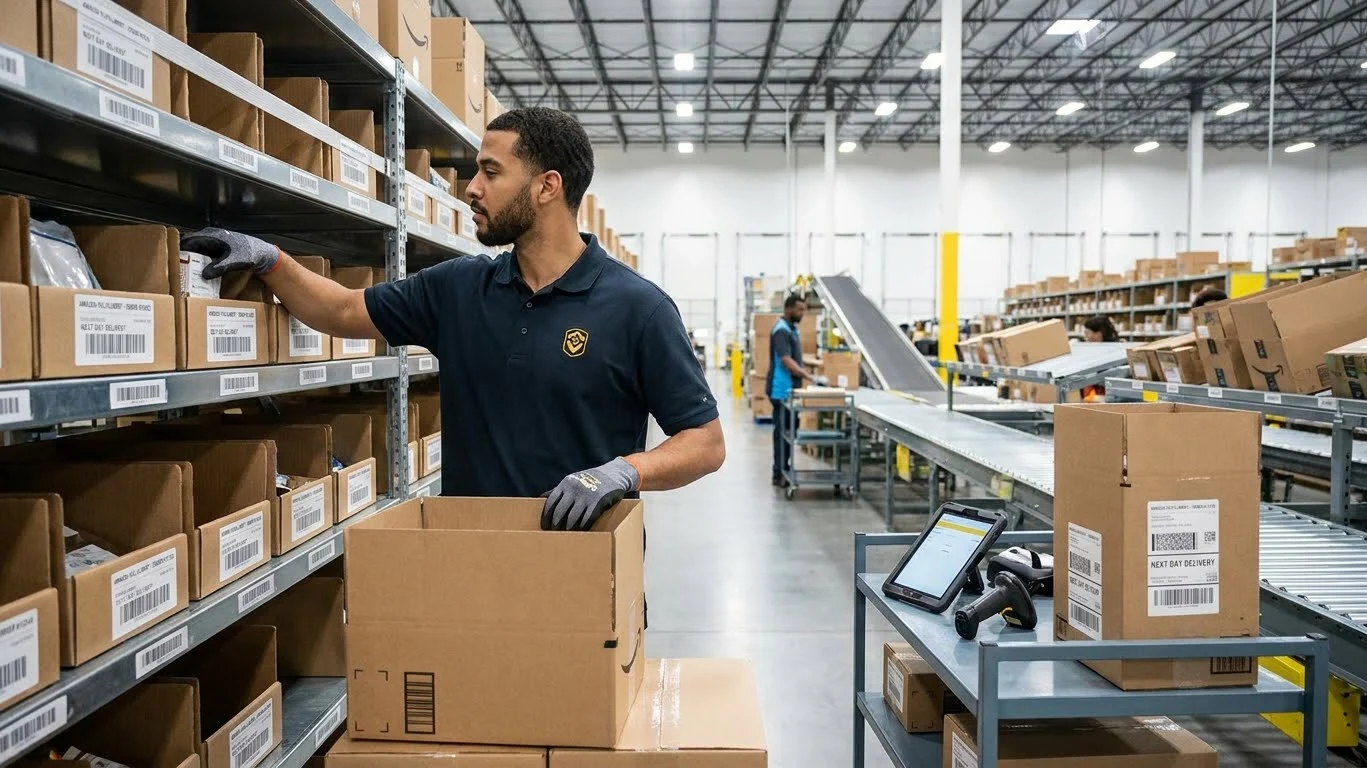
Fulfillment teams often frame order processing as a choice between batching everything and releasing every order immediately. In practice, growing ecommerce brands need a more deliberate model. The best operating rhythm depends on how demand arrives, how complex the orders are, when carriers collect, and what the customer promise requires.
Live commerce makes the decision more important. A Whatnot show or TikTok Shop campaign can create hundreds of orders in a compressed window. Releasing every order instantly may overload picking and create poor travel paths. Waiting for one large end-of-day batch may waste valuable dispatch time. The right answer is often a hybrid system that combines rapid order visibility with controlled waves.
This guide explains how batch, real-time, wave, and hybrid fulfillment work—and how brands can select the right model for standard DTC orders, subscriptions, product drops, and live-selling events.
Four Order-Release Models
| Model | How orders enter warehouse work | Best fit | Primary trade-off |
|---|---|---|---|
| Real-time / continuous | Eligible orders release as they arrive | Urgent, low-volume, simple orders | Frequent interruptions and inefficient travel |
| Fixed batch | Orders collect until a scheduled release | Predictable recurring or low-urgency work | Orders may wait unnecessarily |
| Wave fulfillment | Orders release in planned groups by cutoff or profile | Medium/high volume with carrier deadlines | Requires planning and clear priorities |
| Hybrid | Fast-path orders release continuously while other work moves in waves | Multi-channel and live-commerce operations | Requires stronger rules and visibility |
The release model is different from the picking method. A wave of orders may be picked individually, in clusters, by zone, or in bulk. The central question is when an eligible order becomes active warehouse work.
What Real-Time Fulfillment Actually Means
Real-time does not mean that a picker reacts to every order within seconds. It means the system evaluates an order shortly after arrival and can release it without waiting for a large scheduled batch.
That model can work well for:
- low daily volume with simple orders;
- premium expedited service;
- replacement shipments;
- high-value orders that require individual attention;
- live-event orders that need immediate identity or inventory confirmation.
The risk is fragmentation. If every new order changes the work queue, associates may travel repeatedly through the same aisles, packing stations may receive unpredictable mixes, and supervisors may struggle to protect carrier cutoffs.
What Batch Fulfillment Does Well
Batching groups orders around a shared characteristic: release time, SKU, carrier, service level, channel, campaign, or subscription cycle. It creates a stable unit of work that can be planned and measured.
Batching is especially effective when many orders contain the same hero SKU or bundle. A subscription box run, preorder release, creator kit, or product launch can often be assembled more efficiently when components and packaging are staged for a defined quantity.
However, a batch should not become a waiting room. If an order is eligible at 8:00 a.m. and the only release is 4:00 p.m., the operation gives up most of the available processing day.
Why Live Commerce Needs a Hybrid Model
Whatnot's current seller policy requires orders to ship within two business days and considers an order shipped after a valid drop-off confirmation such as a carrier acceptance, kiosk, manifest, or Whatnot scanner event.[1] That makes carrier handoff—not merely label creation—a meaningful operational milestone.
Live selling also creates an unusual arrival curve. During the stream, orders may arrive one item at a time, while the total volume becomes a large concentrated backlog. A hybrid model can respond in stages:
| Event stage | Recommended operating response |
|---|---|
| Before the stream | Reserve inventory, stage packaging, validate listings and mappings |
| During the stream | Ingest orders continuously, lock sold inventory, isolate exceptions |
| Short intervals during/after | Release waves by show, seller, SKU family, or shipping profile |
| After the event | Reconcile unsold inventory, clear exceptions, complete carrier handoff |
This approach preserves immediate inventory control without forcing the warehouse to pick in the exact sequence that orders arrived.
Separate Order Ingestion from Work Release
One of the most useful design decisions is to treat these as two different events.
Order ingestion confirms that the selling channel successfully transmitted the order, customer address, item mapping, payment status, and service requirements.
Work release confirms that the order is ready for physical execution. Inventory is available, fraud or payment holds are resolved, the address is usable, and the order belongs in the active priority window.
An order can be visible immediately without being released immediately. This separation gives customer service and operations real-time visibility while allowing the warehouse to build efficient waves.
Build Release Rules Around Customer Promises
Start with the dispatch commitment and work backward through carrier pickup, packing, picking, replenishment, and order release.
| Order profile | Suggested release logic |
|---|---|
| Expedited DTC | Continuous fast path until service cutoff |
| Standard DTC | Multiple waves throughout the day |
| Whatnot show | Show-level or timed waves with rapid exception review |
| TikTok Shop campaign | Channel/event waves plus viral-demand trigger rules |
| Subscription box | Scheduled build and fulfillment batches |
| Wholesale replenishment | Appointment, routing-guide, and pallet/case workflow |
| Personalized order | Release after customization data and materials are verified |
Do not give every order the same priority. If urgent and standard orders share one undifferentiated queue, the operation either over-services low-priority work or risks missing high-priority commitments.
Use Order Profiles to Create Better Waves
The most effective wave criteria reflect physical work. Consider order lines, units, storage zones, packaging type, carrier, service level, hazmat or fragile handling, personalization, and bundle complexity.
A live-commerce event may produce several useful flows:
- Single-item orders for the featured SKU move through a fast lane.
- Multi-item orders are cluster picked after the show closes.
- Fragile or high-value orders move to specialized stations.
- Address, mapping, or inventory problems move to an owned exception queue.
- Combined buyer orders follow the platform's current consolidation rules.
The goal is not to create dozens of tiny processes. It is to prevent the most common, repeatable work from being slowed by the minority of orders that require special handling.
Subscription Boxes Are a Natural Batch Workflow
Shopify distinguishes pay-per-delivery subscriptions, which create new orders at regular intervals, from prepaid subscriptions, which move from scheduled to unfulfilled status when each fulfillment date arrives.[2]
That structure supports a planned operating calendar:
| Milestone | Subscription operation |
|---|---|
| Order lock | Confirm subscriber count, skips, cancellations, and address changes |
| Component allocation | Reserve all products, inserts, cartons, and promotional materials |
| Kitting | Build boxes with scan or count controls |
| Quality release | Verify contents, presentation, weight, and version |
| Label and ship | Release eligible orders around the planned carrier window |
| Reconciliation | Return unused components and investigate variances |
Prebuilding too early can create rework when subscriber quantities or box contents change. Building too late can compress quality checks and carrier handoff. A documented lock date and staged component plan create a reliable middle ground.
Learn more about Subscription Box Fulfillment and Dropp's Kitting & Assembly Services.
Protect Exceptions from Blocking the Main Flow
No release model works without exception ownership. An address issue, missing component, damaged unit, invalid SKU mapping, or special customer request should not stop an otherwise clean wave.
Create a separate queue with:
- a reason code;
- a named owner;
- the time the exception entered the queue;
- the required decision or information;
- a service-level deadline;
- a clear path back into fulfillment.
The warehouse can continue standard work while the right team resolves the blocked order.
Measure the Model with Flow Metrics
Batch size alone does not reveal whether the system works. Track the full path from order arrival to carrier handoff.
| Metric | What it helps diagnose |
|---|---|
| Order ingestion latency | Integration and channel delays |
| Eligible-to-release time | Holds, rules, or poor release cadence |
| Release-to-pick time | Queue and labor constraints |
| Pick-to-pack time | Station capacity or order complexity |
| Pack-to-handoff time | Dock, manifest, or pickup delays |
| Exception aging | Unowned or recurring blockers |
| First carrier event | Physical handoff confirmation |
Review these metrics by channel, service level, order profile, and event. A strong average can hide a weak live-commerce or subscription workflow.
A Decision Framework for Growing Brands
Use real-time or a fast path when the order is urgent, simple, validated, and operationally inexpensive to release alone. Use batches when work is predictable, homogeneous, component-driven, or tied to a scheduled fulfillment date. Use waves when volume requires coordination around capacity and carrier cutoffs. Use a hybrid system when multiple channels and demand patterns share the same operation.
Most growing brands eventually need the hybrid model because their business contains all four conditions at once: standard DTC demand, recurring subscription work, marketplace commitments, and concentrated promotional or live-selling events.
A Practical Daily Rhythm
| Time or trigger | Action |
|---|---|
| Start of shift | Clear aged exceptions and priority orders |
| Morning cutoff | Release standard DTC and marketplace wave |
| Midday | Release second wave and replenish fast-moving locations |
| Live-event trigger | Switch on event monitoring and reserved inventory controls |
| Post-event intervals | Release show-specific waves based on capacity |
| Final carrier window | Protect packing completion and physical handoff |
| End of day | Reconcile backlog, inventory variance, and exceptions |
The schedule should change with volume, labor, carrier windows, and event timing. The value comes from making those decisions explicit rather than allowing the queue to manage itself.
If your brand is balancing everyday DTC demand with subscriptions or live selling, talk to Dropp about a fulfillment-flow assessment. Explore Ecommerce Fulfillment, Live Commerce Fulfillment, and our Whatnot Integration.