
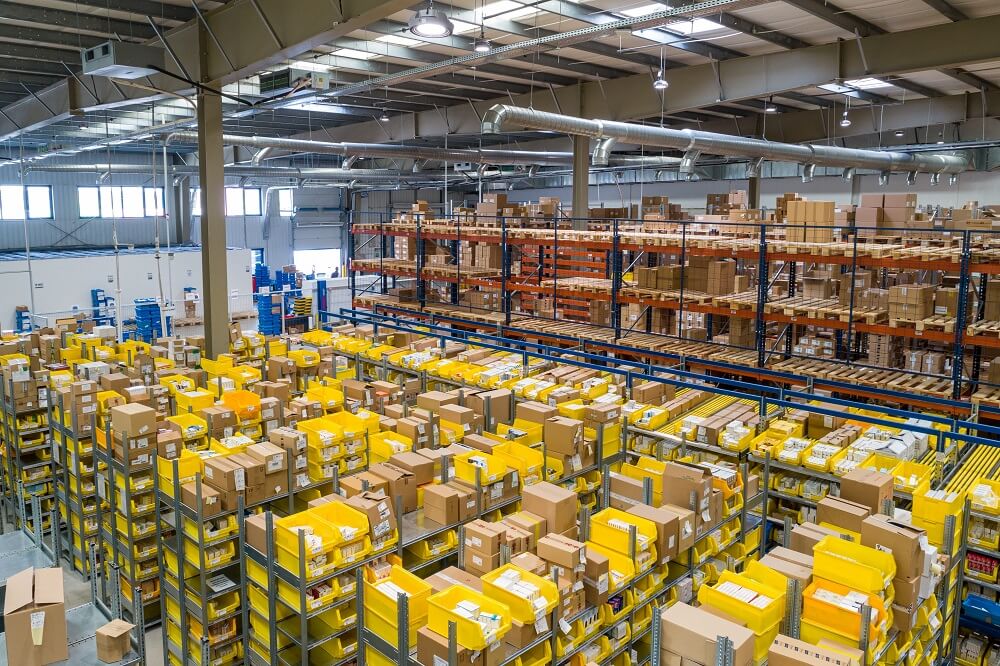
What Is DTC Ecommerce Fulfillment?
Direct-to-consumer (DTC) ecommerce fulfillment is the end-to-end process of receiving, storing, picking, packing, and shipping orders directly to individual customers. Unlike B2B fulfillment (which ships pallets to retailers) or marketplace fulfillment (which follows platform-specific rules), DTC fulfillment is optimized for individual consumer orders — typically small parcels shipped via USPS, UPS, or FedEx.
For DTC brands, fulfillment isn't just a back-office function. It's a core part of the customer experience. The speed of delivery, the quality of packaging, the accuracy of orders, and the ease of returns all directly impact customer satisfaction, repeat purchase rates, and brand perception.
The DTC Fulfillment Lifecycle
Every DTC order follows the same basic lifecycle, but the complexity increases dramatically as volume grows:
1. Inventory Receiving
Products arrive at the warehouse from manufacturers or suppliers. Each shipment must be inspected, counted, quality-checked, and stored in designated locations. For DTC brands, this often means receiving shipments from multiple suppliers across different product categories.
Key metrics: Receiving accuracy rate, time-to-shelf (hours from dock to available inventory)
2. Storage & Inventory Management
Products are stored in optimized locations based on velocity (how frequently they sell), size, and category. High-velocity items go in easily accessible pick locations; slow movers go to bulk storage.
Key metrics: Inventory accuracy, storage utilization rate, shrinkage rate
3. Order Processing
When a customer places an order on your Shopify store (or other platform), the order is transmitted to the warehouse management system (WMS). The system validates inventory availability, generates a pick list, and assigns the order to a picker.
Key metrics: Order processing time, system sync latency
4. Picking
Warehouse staff physically retrieve the ordered items from their storage locations. For single-item orders, this is straightforward. For multi-item orders, efficient pick paths and batch picking strategies become critical.
Key metrics: Pick accuracy, picks per hour, travel time per order
5. Packing
Items are placed in appropriate packaging — boxes, poly mailers, or padded envelopes — with any required inserts (packing slips, marketing materials, samples). The right box size is selected to minimize dimensional weight charges.
Key metrics: Pack time per order, packaging cost per order, dimensional weight optimization
6. Shipping
Packages are labeled, sorted by carrier, and handed off for delivery. Rate shopping across carriers (USPS, UPS, FedEx, regional carriers) ensures the best combination of speed and cost for each shipment.
Key metrics: Shipping cost per order, carrier mix optimization, label accuracy
7. Delivery & Tracking
Customers receive tracking information and can monitor their package's journey. Proactive communication about shipping status reduces "where is my order" (WISMO) support tickets.
Key metrics: Transit time, delivery success rate, WISMO ticket volume
8. Returns Processing
When customers return items, the reverse logistics process begins — receiving the return, inspecting the item, restocking (if sellable), and processing the refund or exchange.
Key metrics: Return processing time, restock rate, return-related support tickets
When Should a DTC Brand Outsource Fulfillment?
Not every brand needs a 3PL from day one. Here's a framework for deciding when to make the switch:
Self-Fulfillment Makes Sense When:
- You're shipping fewer than 100 orders per month
- Your product requires specialized handling you can't easily train others to do
- You're still iterating on packaging and unboxing experience
- Cash flow is tight and you need to minimize fixed costs
- You have available space (garage, spare room) that's not costing you rent
It's Time to Outsource When:
- You're consistently shipping 200+ orders per month
- Fulfillment is taking more than 20 hours per week of your time
- You're missing shipping deadlines or making errors
- You need to hire dedicated staff just for packing and shipping
- You're running out of space or your landlord is complaining
- You want to offer 2-day shipping but can't from a single location
- Your time is better spent on marketing, product development, or customer relationships
The golden rule: If the opportunity cost of your time spent on fulfillment exceeds the cost of outsourcing, it's time to switch.
How to Choose a 3PL for Your DTC Brand
Not all 3PLs are created equal. Here's what to evaluate:
1. Platform Integration
Your 3PL must integrate seamlessly with your ecommerce platform (Shopify, WooCommerce, BigCommerce, etc.) for automatic order syncing, inventory updates, and tracking number pushback. Manual order entry is not acceptable at scale.
2. Geographic Coverage
Where are your customers? If 60% of your orders ship to the East Coast, you need a warehouse on the East Coast. Multi-warehouse 3PLs can split inventory across locations to reduce transit times and shipping costs.
Dropp operates warehouses in New Jersey, California, Georgia, and Texas — covering 95% of the US population within 2-day ground shipping.
3. Pricing Transparency
Avoid 3PLs with complex, opaque pricing. You should be able to predict your monthly fulfillment costs within 10% based on your order volume. Key cost components:
- Storage: Per pallet, per shelf, or per cubic foot per month
- Pick & pack: Per order + per additional item
- Shipping: Actual carrier cost (pass-through) or negotiated rates
- Receiving: Per unit or per hour for intake processing
- Special services: Kitting, custom packaging, inserts
4. Technology & Visibility
You need real-time visibility into inventory levels, order status, and shipping performance. A good 3PL provides a dashboard or portal where you can see everything without calling or emailing your account manager.
5. Scalability
Can the 3PL handle your Black Friday volume? What about a viral TikTok moment that 10x's your daily orders? Ask about surge capacity, staffing flexibility, and their largest client's daily volume.
6. Returns Handling
Returns are inevitable in DTC. Your 3PL should offer returns processing — receiving returned items, inspecting them, restocking sellable inventory, and disposing of damaged goods. Some 3PLs charge per return; others include basic returns in their standard pricing.
7. Custom Packaging Support
For DTC brands, the unboxing experience matters. Your 3PL should support custom boxes, branded tissue paper, thank-you cards, stickers, and seasonal inserts without charging exorbitant fees.
The Economics of DTC Fulfillment
Let's break down typical fulfillment costs for a DTC brand shipping 1,000 orders per month with an average order value of $65:
| Cost Component | Self-Fulfillment | 3PL (Dropp) |
|---|---|---|
| Warehouse/storage | $1,500/month (rent) | $400/month |
| Labor (packing) | $3,200/month (part-time hire) | Included in pick & pack |
| Pick & pack fee | — | $3,000/month ($3/order) |
| Shipping supplies | $800/month | $500/month |
| Shipping labels | $6,500/month (retail rates) | $5,200/month (negotiated rates) |
| Your time (10 hrs/week) | $2,500/month (opportunity cost) | $0 |
| Total | $14,500/month | $9,100/month |
Savings with 3PL: $5,400/month — plus you get back 40+ hours per month to invest in growth.
The savings come from three sources:
- Negotiated shipping rates — 3PLs ship millions of packages and get volume discounts you can't access alone
- Eliminated overhead — No rent, no employees, no supplies to manage
- Time recaptured — Your hours are worth more spent on revenue-generating activities
Common DTC Fulfillment Mistakes
Mistake 1: Choosing a 3PL Based on Price Alone
The cheapest 3PL is rarely the best value. Low per-order fees often come with hidden costs — slow processing times, poor accuracy, no customer support, and rigid contracts. A 3PL that costs $0.50 more per order but ships same-day and maintains 99.9% accuracy will generate far more revenue through better customer experience.
Mistake 2: Not Planning for Peak Season
Black Friday/Cyber Monday can generate 3–5x your normal daily volume. If you haven't communicated your forecast to your 3PL and pre-positioned inventory, you'll face delays during the most critical selling period of the year.
Mistake 3: Ignoring Dimensional Weight
Shipping a small product in an oversized box costs significantly more due to dimensional weight pricing. Work with your 3PL to optimize box sizes for your product catalog — this alone can save 15–25% on shipping costs.
Mistake 4: Treating Returns as an Afterthought
Returns are a profit center if handled well. Fast refund processing increases customer lifetime value. Efficient restocking gets inventory back on the shelf quickly. A clear returns policy reduces support costs.
Mistake 5: Not Monitoring 3PL Performance
Trust but verify. Track your 3PL's accuracy rate, shipping speed, and customer complaints weekly. Set clear SLAs and hold your provider accountable. The best 3PLs welcome this scrutiny because they know their numbers are strong.
Fulfillment Strategies for DTC Growth Stages
Early Stage (100–500 orders/month)
- Focus on accuracy over speed
- Use standard packaging to keep costs low
- Ship from a single warehouse location
- Prioritize platform integration and automation
Growth Stage (500–2,000 orders/month)
- Invest in branded packaging and unboxing experience
- Start monitoring fulfillment KPIs weekly
- Consider 2-day shipping as a competitive advantage
- Negotiate shipping rates based on growing volume
Scale Stage (2,000–10,000+ orders/month)
- Split inventory across multiple warehouses for faster delivery
- Implement sophisticated inventory forecasting
- Offer same-day processing and 2-day delivery nationwide
- Build custom workflows for subscription orders, bundles, and kits
- Integrate returns into a seamless customer experience
How Dropp Supports DTC Brands
Dropp was built by ecommerce operators who understand the DTC growth journey firsthand. Our fulfillment infrastructure is designed specifically for the challenges DTC brands face:
Multi-Warehouse Network. Five strategically located warehouses (NJ, CA, GA, TX, and Jackson Township, NJ) ensure 2-day ground delivery to 95% of the US population.
Shopify-Native Integration. Orders sync in real-time. Inventory updates automatically. Tracking numbers push back to your store without manual intervention.
Flexible Pricing. No long-term contracts. No minimum order requirements. Pay for what you use, scale up or down as your business demands.
Custom Packaging. We support fully branded packaging experiences — custom boxes, tissue paper, inserts, stickers, and seasonal materials — at no premium over standard packaging.
Same-Day Processing. Orders placed before 2 PM ship the same day. Every day. No exceptions.
Dedicated Account Management. You get a real person who knows your brand, your products, and your priorities — not a support ticket queue.
Getting Started with Dropp
Ready to stop packing boxes and start growing your brand? Here's how to get started:
- Get a custom quote — Tell us about your brand, order volume, and product catalog
- Onboarding — We set up your account, integrate your platforms, and configure your packaging
- Inventory transfer — Ship your inventory to our nearest warehouse
- Go live — Orders start flowing to Dropp automatically; you focus on selling
The entire onboarding process takes 7–14 days. Most brands are fully transitioned within two weeks.
Get a quote today | Explore our ecommerce fulfillment services | See how we integrate with Shopify