
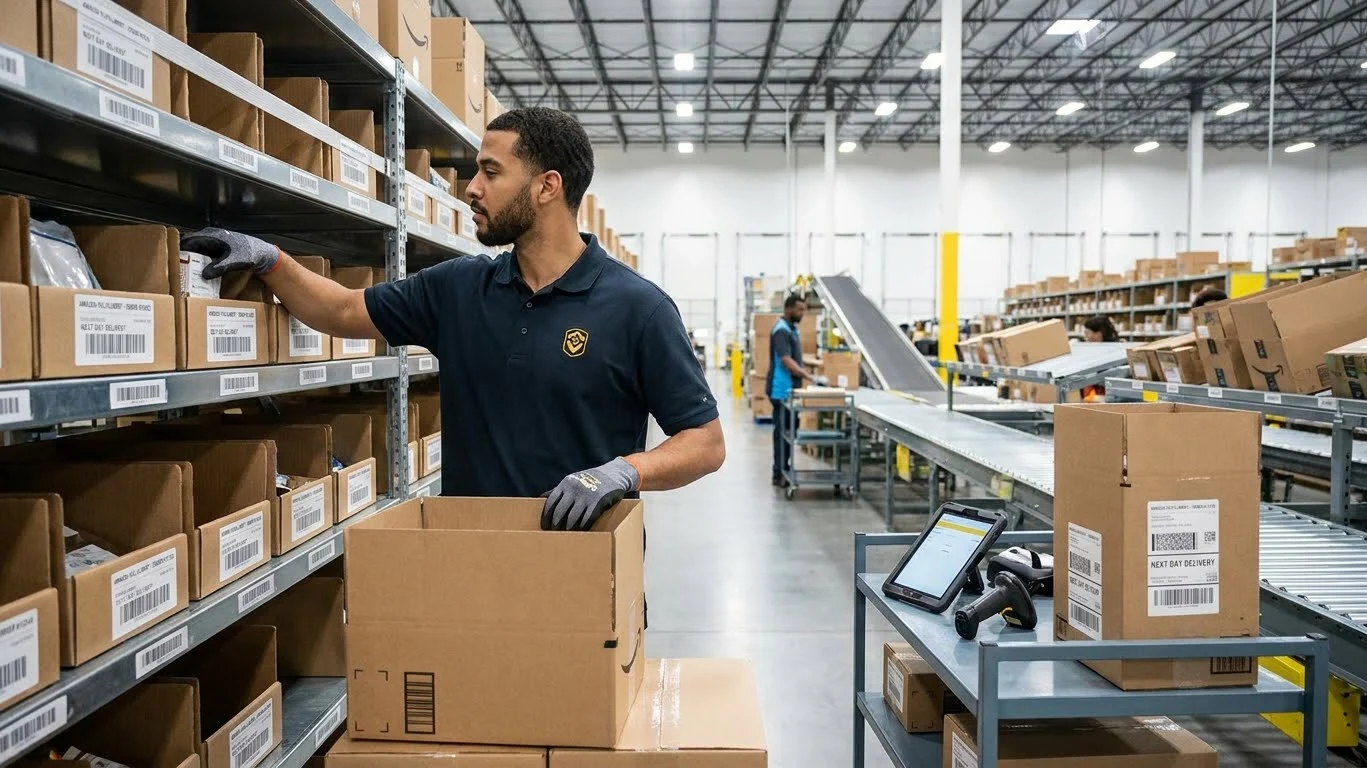
TikTok Shop can concentrate demand faster than a traditional ecommerce campaign. A creator post, live demonstration, affiliate push, or limited promotion can move a product from normal daily volume to a warehouse-critical event before the operations team has time to add labor or replenish packaging.
Viral demand is valuable only when the brand can convert it into accurate, trackable deliveries. TikTok Shop's current U.S. guidance requires sellers to meet applicable fulfillment service levels, provide valid tracking, use adequate packaging, and manage key performance outcomes such as late dispatch, on-time delivery, seller-fault cancellation, and out-of-stock cancellation.[1] [2]
The right response is not simply to hold more inventory. Brands need a coordinated operating playbook across forecasting, inventory allocation, order integration, packaging, labor, carrier handoff, and customer-service exceptions.
Viral Demand Is a Different Operating Profile
Traditional ecommerce demand is often distributed across hours or days. TikTok Shop demand can be highly concentrated and influenced by factors that are hard to repeat exactly.
| Demand driver | Operational effect | Preparation question |
|---|---|---|
| Creator content gains traction | Orders accelerate outside the campaign plan | How quickly can inventory and labor plans be escalated? |
| Live selling event | Many orders arrive in a short window | Is inventory reserved and packaging staged? |
| Affiliate network pickup | Multiple creators promote the same SKU | Is available-to-promise synchronized across channels? |
| Limited-time promotion | Conversion rises while margin tightens | Is the pack-out efficient enough for the offer economics? |
| Product bundle | Component demand becomes hidden | Can the system calculate bundle availability correctly? |
Averages are particularly dangerous. A store averaging 300 orders per day may generate most of those orders within one hour. The warehouse needs to plan for the arrival curve, not only the daily total.
Start with an Event-Level Forecast
Build a forecast for each campaign or live event. The model should separate baseline demand from the incremental demand expected from creators, paid media, discounts, and live activity.
Use at least three cases:
| Scenario | Purpose | Operating response |
|---|---|---|
| Low | Protect against overbuying | Maintain normal labor and release unused reserve quickly |
| Expected | Establish the primary plan | Stage inventory, supplies, and planned staffing |
| Viral | Protect service during upside | Trigger additional labor, pack stations, pickups, and exception ownership |
The assumptions should be visible to marketing and operations. If marketing changes the offer, creator count, event timing, or media spend, operations should see the revised demand range.
Protect Inventory Before the Campaign Starts
A viral campaign cannot succeed if the same units are promised on Shopify, Amazon, wholesale channels, and TikTok Shop. Create an explicit inventory allocation for the event.
The allocation should include sellable units, quality hold, safety stock, bundle components, samples, damaged units, and channel commitments. Define when unused event inventory returns to general availability.
For bundles, calculate availability from the scarcest component. If one offer consumes a supplement bottle, shaker, and insert, the system should not promise more bundles than the available component set.
Read Live Selling Inventory Management for a detailed oversell-prevention framework.
Validate the TikTok Shop Integration
Order integration should be tested before the event, not during the first spike. A representative test should confirm product mapping, variants, bundles, shipping method logic, cancellation handling, tracking updates, inventory synchronization, and address exceptions.
TikTok Shop describes Seller Shipping, TikTok Shipping, and Fulfilled by TikTok as available fulfillment approaches for applicable U.S. sellers. The selected operating model affects labels, logistics providers, handoff, and tracking workflows, so brands should confirm the current platform rules for their account and order type.[2]
Dropp's TikTok Shop Integration connects the channel to a broader multi-channel fulfillment operation, allowing brands to coordinate TikTok Shop with DTC and marketplace inventory.
Build the Warehouse Playbook
The warehouse plan should convert the campaign forecast into physical decisions.
Stage packaging materials
Confirm carton sizes, mailers, void fill, liquid containment, inserts, labels, and promotional materials. Packaging shortages can stop output even when product inventory is available.
TikTok Shop's shipping guidance requires adequate protection and proper packaging. Brands should document the product-specific pack-out, especially for liquids, glass, fragile items, cosmetics, and supplements.[2]
For supplement-specific controls such as lot visibility, date rotation, status segregation, and recall-ready records, explore Supplements & Nutraceuticals Fulfillment.
Segment order profiles
Single-item hero-SKU orders can move through a fast path. Multi-line orders, gift sets, fragile products, hazmat exceptions, personalized items, and address issues should enter separate flows.
Segmentation keeps the high-volume standard path moving without removing necessary controls from complex orders.
Set labor trigger points
Do not schedule one fixed headcount for every scenario. Define labor triggers based on orders received, open order backlog, order lines, pack-out complexity, and carrier cut-offs.
The viral-case plan may include cross-trained receiving labor, additional pack stations, extended shifts, weekend coverage, or a second carrier handoff. Confirm these options before the campaign launches.
Protect scan validation
High volume is not a reason to remove item verification. It is when the control is most valuable. Keep barcode or system validation in the main path, and move blocked orders to an owned exception queue.
Manage Dispatch and Tracking as Core Customer Experience
TikTok Shop's Fulfillment Policy emphasizes dispatch, delivery, valid tracking, and fulfillment metrics. A label alone does not prove a package physically entered the carrier network, so the operating plan should distinguish label creation, packed status, carrier handoff, and first tracking event.[1]
Review these milestones during and after the event:
| Milestone | Operational question |
|---|---|
| Order imported | Did every platform order reach the fulfillment system? |
| Inventory allocated | Was the exact sellable unit reserved? |
| Pick verified | Was the correct SKU and quantity scanned? |
| Pack completed | Did the order follow its product-specific standard? |
| Tracking returned | Did the channel receive valid tracking data? |
| Carrier handoff | Did the parcel physically leave the facility? |
| Exception resolved | Is every blocked order owned and time-bound? |
This status model makes it easier to separate a system issue from a warehouse issue or carrier issue.
Prepare Customer Service for the Spike
Support volume often follows order volume. Customer service should know the promotion terms, estimated processing windows, cancellation rules, address-change process, bundle contents, and escalation channel.
Create approved responses for common questions, but keep the underlying order status visible. A fast generic reply does not help if the support team cannot see whether the order imported, packed, shipped, or entered an exception.
Run a Post-Event Operating Review
Within a few business days, compare the campaign plan with actual performance.
Review forecast variance, orders by hour, units per order, bundle demand, inventory variance, backlog peak, pack rate, dispatch timing, tracking validity, damage, cancellations, and top exception causes. Assign corrective actions before the next event.
The goal is not to criticize a forecast for being wrong. It is to improve the next set of assumptions and remove operational friction while the details are still fresh.
A 72-Hour Viral-Demand Response Plan
| Window | Priority actions |
|---|---|
| Before launch | Reserve inventory, validate integration, stage supplies, confirm labor and pickups |
| First 6 hours | Monitor order ingestion, inventory, backlog, exceptions, and creator-driven SKU mix |
| 6–24 hours | Adjust labor, replenish stations, protect carrier handoff, escalate stock risks |
| 24–72 hours | Clear exceptions, reconcile inventory, monitor tracking, brief customer service |
| After 72 hours | Complete the operational review and update the next campaign playbook |
Turn Virality into a Repeatable Fulfillment Capability
The durable advantage is not surviving one spike. It is creating an operating model that makes the next creator campaign or live event easier to execute.
That model combines event-level forecasting, channel allocation, validated integration, staged packaging, flexible labor, scan controls, real carrier handoff, and visible exceptions. When those pieces work together, marketing can move faster without asking the warehouse to improvise.
If your brand is planning TikTok Shop campaigns or live-selling growth, talk to Dropp about a fulfillment readiness assessment. Explore Live Commerce Fulfillment, the TikTok Shop Integration, and our Ecommerce Fulfillment Services.