The First Physical Brand Moment
A customer can browse a DTC store for minutes and open a parcel for seconds. Those seconds can still tell the truth about the brand: whether the product arrived safely, whether the package is easy to open, whether materials feel considered, and whether the contents match what was promised. Shopify describes packaging design as a combination of structure, graphics, and materials that must work for the product and sales channel, not just look appealing in a photograph. [1]
The budget-conscious goal is not to make every order look like a luxury gift. It is to establish a recognizable, protective standard that a fulfillment team can repeat under ordinary volume and during a promotion. A modest brand insert in an appropriately sized package may do more for the customer experience than an oversized printed box full of filler. This guide concentrates on DTC ecommerce and livestream-associated shipments, with physical fulfillment practicality at the center.
Begin With Product Protection and Carrier Reality
Before choosing a color palette, define the product's physical constraints. A soft shirt, a glass skincare bottle, a limited-edition trading card, and a subscription bundle do not share one safe pack-out. Record item dimensions, weight, fragility, leak potential, temperature sensitivity, and whether its existing retail box already provides protection. The shipment needs enough cushioning and a strong enough outer package for the carrier journey.
UPS recommends a rigid box within its weight limit, suitable cushioning, appropriate shipping tape, clean outer markings, and a securely attached label. It also notes that one-box versus two-box packing depends on the product and protection needed. [2] These are carrier guidelines, not a promise that one format prevents all damage. Have the brand approve a representative packed sample for each meaningful SKU or kit, including the way it will be labeled and scanned at the warehouse.
| Product pattern | Starting format to test | Main risk to validate |
|---|---|---|
| Soft, durable apparel | Well-fitted mailer or compact box | Water exposure, sharp edges, presentation |
| Breakable container | Supported inner pack and appropriate outer box | Movement, leakage, impact |
| Flat collectible | Rigid sleeve or supported mailer | Bending, corner damage, scannability |
| Multi-item gift set | Defined insert or separated components | Items colliding or missing |
| Subscription assortment | Repeatable kit build with approved substitutions | Component accuracy and campaign timing |
These are test candidates, not certified packaging specifications. Sensitive or regulated products need their own packaging and carrier review. If your store sells multiple categories, choose a small library of approved packaging rules rather than one generic box. See the kitting and assembly service for handling bundles and recurring assortments.
Right-Size Before Buying Custom Print
Carrier cost can rise when a parcel occupies more space than its actual weight suggests. FedEx explains dimensional weight as a measure of package volume and says a shipment may be charged on the greater of dimensional or actual weight. Its public US example uses length × width × height divided by 139, but a brand must confirm the applicable service and contract before using that value in a quote. [3]
Imagine a lightweight product in an oversized carton. Making the carton smaller may reduce the dimensional-weight calculation, remove some void fill, and simplify storage. It can also make the product feel more intentionally presented. But do not shrink packaging until the protection fails. Compare actual packed dimensions, measured weight, protective material, labor time, damage outcomes, and carrier invoices, not only the unit price of a box.
An illustrative internal cost model is outer package + cushioning + insert + pack labor + transportation + damage/exception reserve per shipped order. It is not a Dropp rate quote. Measure several common baskets, including a single-unit order, a multi-item cart, a gift, and a product-drop order. A small change in box size that rarely applies to actual baskets will not transform the total program; one fewer unnecessary package format might save more labor and purchasing complexity.
Build a Brand Kit With Low-MOQ Elements
The easiest budget path is often a sturdy stock outer package plus a small number of brand-controlled details. Shopify recommends starting with stock packaging, adding labels or stickers, and testing before committing to fully printed boxes. [1] An inside-the-lid message, a concise card, a reusable product-care guide, or a color-consistent tissue wrap may produce an intentional first impression without tying up cash in many custom box sizes.
Decide what each detail is meant to accomplish. An insert might explain product use, invite a customer to register a warranty, give care instructions, or present a QR code to helpful content. It should not confuse the customer about what they bought or promise a future incentive the brand cannot administer. Ask whether every order needs the same insert, or whether a SKU-, campaign-, or first-purchase-specific rule is more relevant.
| Brand element | Cost and operational consideration | When it earns a place |
|---|---|---|
| Standard outer package | Simple to source and replenish | Suitable protection for common baskets |
| Branded sticker or tape | Small change at pack station | Consistent identity without custom cartons |
| Printed care card | Print, insert, and version-control work | Helps customers use the item correctly |
| QR card | Landing page and link upkeep | Useful post-purchase education |
| Custom printed carton | Artwork approval and minimum-order commitments | Repeat volume justifies dedicated stock |
| Seasonal sleeve | Inventory and changeover complexity | Short campaign with a documented end date |
Avoid letting the packaging concept become a warehouse scavenger hunt. If a packer must choose from ten inserts based on an undocumented promotion spreadsheet, both labor and mistake risk grow. Put rules in a pack-out sheet with a version, effective date, SKU or order attribute, and image of the finished package. Retire old inserts at the end of the campaign so outdated offers do not reach customers.
Translate Creative Intent Into Warehouse Instructions
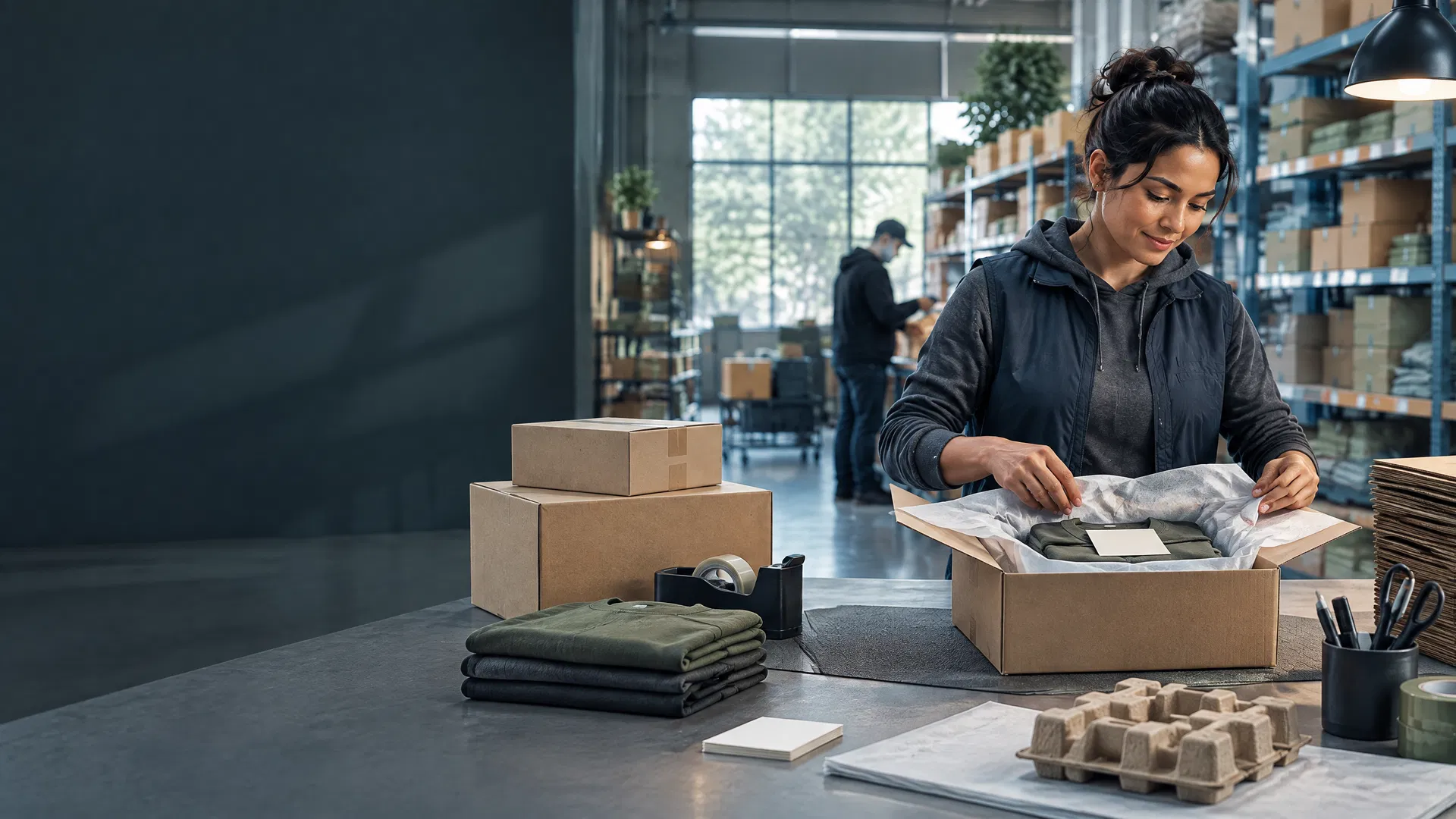
A design file cannot tell a packer whether the tissue goes around each item, whether a gift message is above or below the product, or which side of the box should face up when a label is applied. Create a standard operating procedure with images of the empty pack, item placement, cushioning, insert position, sealed package, and the outside label. Include a range for packed weight and dimensions when the SKU mix is predictable.
For bundle orders, document component quantities and substitutions. A designer might see a visually identical ribbon or card as equivalent; the brand may not. Write who approves any substitute, how the inventory adjustment is recorded, and whether an out-of-stock insert should hold the order or be skipped. The same controls apply to a livestream campaign when buyers expect a specific collectible or limited-edition presentation. The live-commerce fulfillment guide explains why show timing and item identity change the operational plan.
Before release, pack several real baskets with warehouse staff rather than only photographing one perfect sample in a studio. A short pilot can reveal that a carton flap obscures artwork, tissue slows the line, a scanner cannot read the barcode, or the product moves in transit. Revise the instructions while order volume is still manageable.
Keep the Unboxing Promise Honest
Marketing often treats unboxing as a social-media moment. Most customers simply want their item to arrive correctly, cleanly, and without unnecessary waste. A good brand experience begins with the right product, a believable delivery expectation, and packaging that opens without damaging the item. Decorations come after that.
Consider the entire journey. If a customer pays for a premium gift experience, a generic packing slip or an invoice displaying an unrequested price might be a poor fit. If the brand claims minimal waste, an oversized package with layers of plastic contradicts the message. If a product requires instructions, the packaging should make those instructions easy to find. Shopify frames packaging as one of the few physical touchpoints in ecommerce and emphasizes protective, practical design. [1]
Avoid fabricated sustainability claims. A material's recyclability depends on its composition, coatings, and local collection options; a paper look does not prove a package is curbside recyclable. Work with a supplier for documentation before printing environmental claims. A measured reduction in unnecessary material, supported by actual purchasing and pack-out records, is more credible than an unqualified green slogan.
Measure the Full Cost of a Packaging Program
Packaging is not an expense line in isolation. It affects fulfillment labor, carrier billing, stored material space, supplier minimums, damaged shipments, and the customer's first physical impression. Build a simple monthly review that compares packed dimensions and weight, material consumption per order, exception rates, and customer-support themes. If customer complaints describe crushed corners, examine the specific pack type rather than ordering a more expensive printed box for every SKU.
The Dropp pricing guide lays out fulfillment cost inputs without inventing a public rate card. In a proposal, ask a provider whether an insert, special wrap, or kit is priced per order or per component; whether materials are supplied by the brand; and how packaging stock is reconciled. A design that looks inexpensive on a supplier quote can be costly if it adds repeated manual decisions at the pack station.
For a practical pilot, choose two high-volume SKU families and one special bundle. Quote two or three approved outer formats. Pack sample orders with the real instructions. Record material, labor, packed dimensions, and protection feedback. Keep the format that balances total cost and customer experience, then expand only after it works at scale. That is an operating experiment, not a promise of a particular savings percentage.
Connect Packaging to Your DTC Calendar
The packaging library should account for predictable launches and unpredictable peaks. A standard daily pack-out is the default. A limited edition can add one approved insert during a defined date range. A subscription box can use a documented kit bill of materials. A live-selling drop might require a one-of-one item identifier or a show-specific card. Each exception should have a clear start and end date.
Do not buy campaign-only materials until product artwork, quantities, and inbound timing are approved. Keep a small correction process for damaged print runs and mis-sized cartons. If the brand needs a visually elevated seasonal package, test a sleeve or sticker against the cost and operational risk of ordering a wholly new carton. Shopify notes that printed packaging design involves structure, artwork, pre-press, and physical testing; the visual concept is only one stage. [1]
Where packaging is part of a recurring order or Kickstarter reward, map it to the relevant kit configuration. The subscription box fulfillment guide and crowdfunding fulfillment guide offer complementary planning steps for recurring and one-time launches.
Frequently Asked Questions
Should every DTC order use a custom-printed box?
No. Start with the protective format each product needs and test economical branded elements before committing to custom-printed cartons or multiple print runs. [1]
Can smaller boxes always lower shipping charges?
Not always. Actual weight, service, contract terms, dimensions, and damage risk all matter. FedEx explains why dimensional weight makes oversized parcels costly, but a smaller package must still protect its contents. [3]
What should a fulfillment provider receive before packing branded orders?
A SKU-to-pack rule, sample photos, approved materials, insert versions, substitution policy, expected quantities, and a process for reporting exceptions. Verify the rule with real test orders before a launch.
Is a branded insert enough to create a premium experience?
It helps only if the right product arrives safely and the message is relevant. Treat the insert as a useful touchpoint, not a substitute for accurate picking, protection, and honest delivery communication.
To scope a repeatable DTC pack-out and a realistic quote, talk to Dropp with representative products, common baskets, packaging samples, and any scheduled campaigns. If those instructions need to flow from an online store to a warehouse, review our Shopify fulfillment guide for the order-handoff and pack-rule test sequence.