
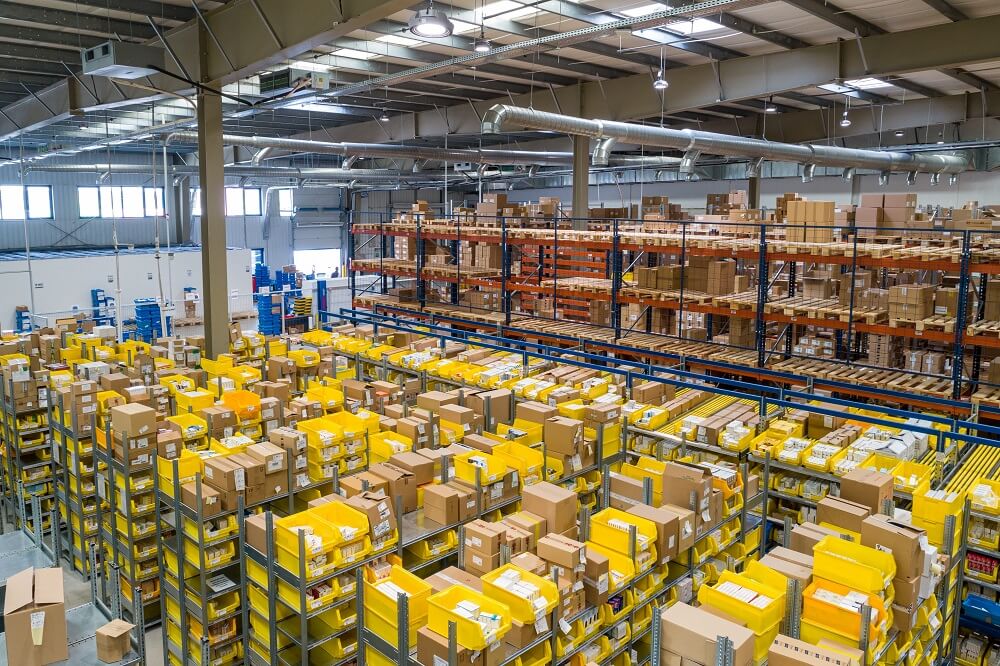
Shipping cost is not one number. It is the combined result of package dimensions, billable weight, origin, destination, service level, carrier rules, order-processing speed, inventory placement, packaging labor, and the customer-facing offer.
That is why a brand can negotiate a lower carrier rate and still see total cost per order rise. A carton may become larger. Inventory may sit farther from demand. A promotion may lower average order value. A late fulfillment handoff may force an expensive service upgrade. A free-shipping offer may attract more low-margin orders than expected.
Shopify's current guidance similarly frames shipping-cost reduction as a coordinated program that includes carrier access, rate design, package sizing, weight reduction, shipping policy, destination analysis, and fulfillment strategy rather than a single discount.[1]
This guide presents 12 operating strategies for ecommerce and DTC brands. Each strategy can reduce cost in the right context, but none should be implemented without measuring service, contribution margin, and customer impact.
Start with a Complete Shipping-Cost Model
Before changing carriers or packaging, define what the business is trying to reduce. Carrier transportation is only one part of the cost-to-serve.
| Cost layer | Examples | Why it matters |
|---|---|---|
| Fulfillment | pick labor, pack labor, order materials, special handling | A cheaper carrier label does not offset inefficient order execution |
| Parcel transportation | base charge, zone, weight, dimensions, residential delivery | These variables determine much of the outbound bill |
| Surcharges | additional handling, oversize, address correction, peak fees | Small process errors can create recurring avoidable expense |
| Inventory placement | number of facilities, replenishment, split shipments | Closer stock can reduce zones, but extra nodes add inventory complexity |
| Customer offer | free, flat-rate, calculated, expedited options | The storefront determines how much cost the brand absorbs |
| Exceptions | reshipments, damage, missed cutoffs, lost packages | Failure demand can erase savings from the original shipment |
Use cost per shipped order, cost per delivered order, and shipping cost as a percentage of net sales. Segment by channel, product family, package type, destination zone, and service level. A blended average is useful for leadership, but it is too coarse for operational decisions.
1. Right-Size Packaging Around the Actual Order Mix
A box should protect the order with the least practical empty space. If a product is billed on dimensional weight, unused volume can become transportation cost.
Begin with an order-profile study. Rank the most common item combinations, current carton selections, actual packed dimensions, void fill, damage, and billed weight. The goal is not to create a unique box for every order. The goal is to build a concise carton library that fits the high-frequency order patterns.
Packaging optimization should evaluate four outcomes together:
| Outcome | Question |
|---|---|
| Cost | Does the new package reduce billable weight or surcharge exposure? |
| Protection | Does damage remain within the acceptable threshold? |
| Labor | Can packers select and assemble it reliably? |
| Brand experience | Does the delivered package still reflect the customer promise? |
For a deeper operating model, use our Ecommerce Packaging Guide and Food & Beverage Fulfillment resource for date- and condition-sensitive products.
2. Reduce Non-Product Weight Without Reducing Protection
Carton weight, inserts, void fill, tape, coolant, promotional material, and bundled components all contribute to the shipment. Review which materials are protective, which are required, which create brand value, and which exist because no one has questioned them.
Test changes through controlled pack standards. Removing material without validation can create more damage, returns, and reships than it saves. The best lightweight design reduces waste while maintaining performance through normal carrier handling.
For live-selling orders, packaging must also support rapid, accurate consolidation. A lighter pack is only useful if the process still preserves buyer and stream-level order identity. See our Live Commerce Fulfillment service for event-driven workflows.
3. Match Service Level to the Customer Promise
Do not automatically select the fastest service. Select the least expensive service that can meet the published delivery promise with an appropriate buffer.
The order journey includes processing time and carrier time. If an order waits two days before handoff, a two-day carrier service does not create a two-day click-to-doorstep experience. Conversely, a same-day warehouse handoff from a well-positioned facility may allow a lower-cost ground service to meet the customer's date.
Create service rules using promised date, origin, destination, order release time, warehouse cutoff, product restrictions, and carrier performance. Review whether expensive upgrades are caused by true customer need or by internal delay.
Our 2-Day Shipping Guide explains how inventory position and order-processing speed support faster delivery without defaulting to premium air services.
4. Compare Rates by Real Shipment Profile
Headline discounts are not a complete comparison. Model the actual package and destination distribution, then include minimum charges and common surcharges.
Build a representative shipment file containing:
- origin postal code;
- destination postal code;
- residential or commercial status;
- actual weight and dimensions;
- service level;
- package type;
- historical accessorial charges;
- delivery performance requirement.
Run that same file across carrier and service scenarios. This creates a comparable analysis instead of relying on one attractive lane or a percentage discount that applies only to part of the rate card.
If a 3PL supplies transportation pricing, ask how rates are updated, which surcharges apply, how invoice adjustments are handled, and how the selected service is governed. Our expanded 3PL Pricing guide provides a quote-comparison framework.
5. Use Multi-Carrier Routing Rules
No carrier or service is best for every package, lane, and promise. Multi-carrier routing can select among qualified options at the order level.
The routing rule should not simply choose the lowest label price. It should consider eligibility, delivery commitment, historical performance, claims experience, package limitations, pickup schedule, cutoff, and customer promise.
Document the hierarchy. For example, the system can eliminate services that cannot meet the promised delivery date, remove ineligible package types, compare the remaining landed transportation cost, then select the best qualified service. Exceptions should be visible to operators instead of silently creating manual work.
6. Position Inventory Closer to Concentrated Demand
Shipping distance affects cost and time. A multi-node network can reduce average zone and improve ground-service reach when demand is sufficiently concentrated.
Distributed inventory is not automatically cheaper. Every additional node requires allocation logic, replenishment, safety stock, transfers, reconciliation, and a policy for split shipments. A brand with a broad slow-moving catalog may create more inventory cost than parcel savings.
Model network alternatives with order density, SKU velocity, inventory carrying cost, split-order probability, facility cost, and service promise. Use our Warehouse Location Strategy and five-location network overview as planning resources.
7. Prevent Split Shipments
Two packages for one order can double several cost elements: pick work, packaging, labels, minimum transportation charges, tracking communication, and exception exposure.
Track split-shipment rate and its causes. Common drivers include poor inventory allocation, inaccurate stock, incomplete replenishment, channel-reserved inventory, and orders containing products stored under different handling rules.
The correct solution is not always to hold the entire order. A delayed order can harm the customer promise. Define when consolidation is economically and operationally preferable, and when partial shipment is justified.
8. Improve Inventory Accuracy and Availability
Inventory errors create expensive downstream behavior. A picker cannot find an item, the order misses cutoff, support intervenes, a package ships from another node, or the customer receives a cancellation.
Improve receiving controls, location discipline, scan compliance, cycle counting, exception ownership, and channel synchronization. Track inventory adjustment rate, short-pick rate, cancellation rate, and order age caused by inventory holds.
For multi-channel brands, use our SKU Management Guide, Inventory Forecasting Guide, and NetSuite integration page.
9. Increase Average Order Value Carefully
Shipping cost as a percentage of revenue can improve when customers purchase more per order. Bundles, subscriptions, add-ons, and free-shipping thresholds can help, but only when product margin, package size, pick complexity, and customer behavior support the offer.
Model the next item, not just the current order. A bundle can increase revenue while moving the package into a more expensive dimensional or surcharge profile. The threshold should be tested against contribution margin rather than copied from competitors.
Our Subscription Box Fulfillment page and Kitting & Assembly Guide explain repeat-order and bundle operations.
10. Design a Transparent Customer-Facing Shipping Offer
Free, flat-rate, and calculated shipping distribute cost differently. The best design balances conversion, margin, clarity, and operational feasibility.
| Offer | Advantage | Risk | Useful when |
|---|---|---|---|
| Free shipping | Simple customer message | Brand absorbs cost; threshold may distort behavior | Margin and order profile can fund a clear offer |
| Threshold free shipping | Encourages larger baskets | Threshold can reduce margin if poorly set | AOV and contribution modeling support the target |
| Flat rate | Predictable customer charge | Cross-subsidy can become uneven | Order and destination variation are manageable |
| Calculated rate | Closely reflects shipment | Cost may surprise customers late | Estimate is shown early and choices are clear |
| Tiered delivery | Gives cost-speed choice | Requires accurate dates and routing | Operations can reliably support multiple promises |
Shopify recommends evaluating shipping rates alongside margin, average order value, package profile, and customer experience.[1] Our Free Shipping Economics Guide provides a full contribution model.
11. Eliminate Avoidable Accessorial Charges
Accessorial cost often reveals process failure. Address correction can point to checkout validation. Additional handling can indicate packaging design. Oversize charges can expose carton-selection rules. Reweigh and redimension adjustments can show that master data does not reflect packed reality.
Create an accessorial dashboard by code, SKU, package, site, and operator workflow. Assign each frequent charge to an owner and a corrective action. Repeated charges should become an engineering or process problem, not a routine accounting surprise.
12. Manage Exceptions Before They Become Reshipments
The least expensive replacement shipment is the one the brand does not need to send. Connect fulfillment quality, carrier visibility, and support response.
Track address holds, damaged parcels, no-movement scans, delivery exceptions, lost-package claims, and customer contacts. Define when to wait, intercept, reship, refund, or communicate. Measure original shipment cost and total resolution cost.
Accuracy is part of shipping economics. Our Order Accuracy Guide explains the controls that reduce wrong-item and quantity errors before carrier handoff.
Build a 90-Day Shipping-Cost Program
Days 1–30: Create the baseline
Collect shipment-level data, normalize package dimensions and weights, separate carrier charges from fulfillment cost, identify high-cost lanes and packages, and review service performance.
Days 31–60: Test the highest-value changes
Run controlled tests on carton selection, routing rules, service mapping, inventory placement, split-order policy, and customer-facing thresholds. Protect delivery and damage metrics.
Days 61–90: Operationalize the winners
Update standard operating procedures, system rules, packaging masters, dashboards, customer promises, and financial forecasts. Assign owners and review cadence.
Metrics That Keep Savings Honest
| Metric | What it protects |
|---|---|
| Cost per shipped order | Outbound operating efficiency |
| Cost per delivered order | Exception and reship reality |
| Shipping cost as % of net sales | Commercial sustainability |
| On-time handoff | Warehouse execution |
| On-time delivery | Customer promise |
| Damage and reship rate | Packaging and handling quality |
| Split-shipment rate | Inventory and allocation efficiency |
| Accessorial cost per package | Master-data and process discipline |
| Contribution margin per order | Overall business value |
Frequently Asked Questions
What is the fastest way to reduce shipping cost?
Start with shipment-level data. Right-sized packaging, service-level mapping, avoidable accessorials, and split shipments often reveal actionable opportunities without requiring a full network change.
Should every ecommerce brand use multiple carriers?
Not necessarily. Multi-carrier routing adds value when package profiles, lanes, volume, service needs, and carrier eligibility vary enough to justify the operational complexity.
Does a 3PL always reduce shipping rates?
No. A 3PL may provide network, process, technology, and transportation advantages, but the result depends on the brand's volume, order profile, package characteristics, destination mix, requirements, and current baseline.
Is free shipping cheaper than flat-rate shipping?
The customer-facing label does not determine the underlying cost. Compare contribution margin, conversion, basket size, package profile, and customer behavior under each offer.
How often should shipping performance be reviewed?
Operations teams should monitor execution frequently and review strategic carrier, packaging, network, and offer decisions on a regular cadence. The exact schedule depends on order volume and volatility.
Reduce Cost Without Weakening the Promise
Shipping cost reduction is a systems problem. Packaging, inventory, warehouse execution, transportation, storefront policy, and customer communication must reinforce one another.
The strongest program does not chase the lowest label on yesterday's order. It designs a repeatable way to meet the customer promise at a sustainable total cost.
If your team wants to model fulfillment, packaging, network, and shipping economics, talk to Dropp. Explore Ecommerce Fulfillment Services, 3PL Pricing, Shopify Integration, Live Commerce Fulfillment, and the 3PL & Fulfillment FAQ.